
On Thursday, August 4th, I presented “Beyond the MCSE: Red Teaming Active Directory” at DEF CON 24 (2016). Here are the slides for this talk: DEFCON24-2016-Metcalf-BeyondTheMCSE-RedTeamingActiveDirectory Here’s my talk description from the DEF CON website: Active Directory (AD) is leveraged by 95% of the Fortune 1000 companies for its directory, authentication, and management capabilities, so …
Category: ActiveDirectorySecurity
Jul 19 2016
Black Hat USA 2016 Talk – Beyond the MCSE: Active Directory for the Security Professional
This summer in Las Vegas, I’m speaking at Black Hat USA 2016 on Active Directory security, “Beyond the MCSE: Active Directory for the Security Professional.” This talk covers the key AD security components with specific focus on the things security professionals should know. I put this talk together because I have noticed that while Active …
Jul 06 2016
DEF CON 24 (2016) Talk – Beyond the MCSE: Red Teaming Active Directory
This August at DEF CON 24, I will be speaking about Active Directory security evaluation in my talk “Beyond the MCSE: Red Teaming Active Directory”. This talk is focused on the Red side of AD security, specifically how to best evaluate the security of AD and quickly identify potential security issues. Whether you perform “Red …
Mar 14 2016
Sneaky Active Directory Persistence #17: Group Policy
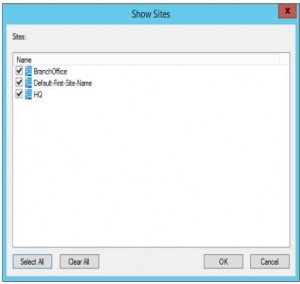
The content in this post describes a method through which an attacker could persist administrative access to Active Directory after having Domain Admin level rights for about 5 minutes. Complete list of Sneaky Active Directory Persistence Tricks posts This post explores how an attacker could leverage the built-in Active Directory management capability called Group Policy …
Mar 09 2016
Sneaky Active Directory Persistence #16: Computer Accounts & Domain Controller Silver Tickets
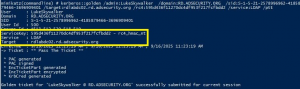
The content in this post describes a method by which an attacker could persist administrative access to Active Directory after having Domain Admin level rights for about 5 minutes. All posts in my Sneaky Active Directory Persistence Tricks series This post explores how an attacker could leverage computer account credentials to persist in an enterprise …
Mar 02 2016
ADSecurity.org’s Unofficial Guide to Mimikatz & Command Reference Updated for Mimikatz v2.1 alpha 20160229
ADSecurity.org’s Unofficial Guide to Mimikatz & Command Reference page is updated for the new modules/features in Mimikatz v2.1 alpha 20160229. According to Mimikatz author, Benjamin Delpy, the following updates are included in the most recent Mimikatz version(s): Mimikatz Release Date: 2/29/2016 2.1 alpha 20160229 (oe.eo) edition System Environment Variables & other stuff [new] System Environment …
Feb 23 2016
Building an Effective Active Directory Lab Environment for Testing
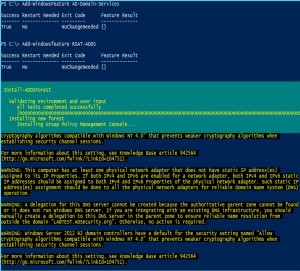
This post is not meant to describe the ultimate lab configuration. Instead the focus is on a lab environment that can be stood up quickly and easily as a learning tool. The best way to learn about computer networking and security is to have a home lab. The great thing is that a home lab …
Feb 11 2016
Detecting Offensive PowerShell Attack Tools
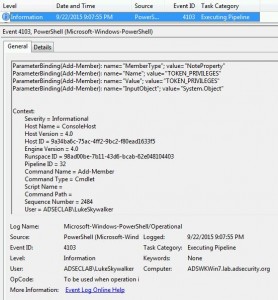
At DerbyCon V (2015), I presented on Active Directory Attack & Defense and part of this included how to detect & defend against PowerShell attacks. Update: I presented at BSides Charm (Baltimore) on PowerShell attack & defense in April 2016. More information on PowerShell Security: PowerShell Security: PowerShell Attack Tools, Mitigation, & Detection The most …
Jan 27 2016
Active Directory Recon Without Admin Rights
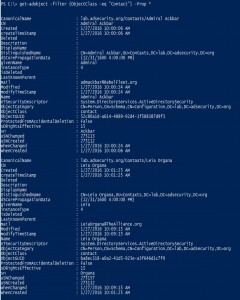
A fact that is often forgotten (or misunderstood), is that most objects and their attributes can be viewed (read) by authenticated users (most often, domain users). The challenge is that admins may think that since this data is most easily accessible via admin tools such as “Active Directory User and Computers” (dsa.msc) or “Active Directory …
Jan 22 2016
ADSecurity.org in the Press!
IT World Canada reached out to me recently to help with an article on Active Directory attack & defense. Read the article: “IT not doing enough to secure Active Directory, says expert.” IIT World Canada also requested comments for a second story titled: “22 tips for preventing ransomware attacks“.
Recent Comments